Walks
Our programme of Sunday walks included Dover’s forgotten spaces, its geology and landscape, public artworks, ornithology and architecture. Scroll down to review all the walks.

___________________________

Dover Crossings 1, 2, 3
by Simon Bill
Simon Bill’s three ‘Dover Crossings’ walks for the Festival took place around the periphery of Dover in Elmsvale, Aycliffe, St Radigunds and Tower Hamlets.
They linked the built environment with the Kent Downs AONB as the walkers passed from built up areas to countryside and back to urban areas again. The Kent Downs is like a huge wild garden accessible within a few minutes from most everywhere in Dover. Most people also have a wonderful view from their homes, the result of homes being built on the hills that are either side of the former river valleys that have become the different Dover Wards that make up Dover. An additional focus of the walks was the fascinating and visually very appealing optical illusion murals that Simon has been painting in Aycliffe, St Radigunds and Tower Hamlets. These two are on the Scout Hut in Tower Hamlets.
___________________________

Butterflies and Birds around Dover
Birds and Butterflies around Dover
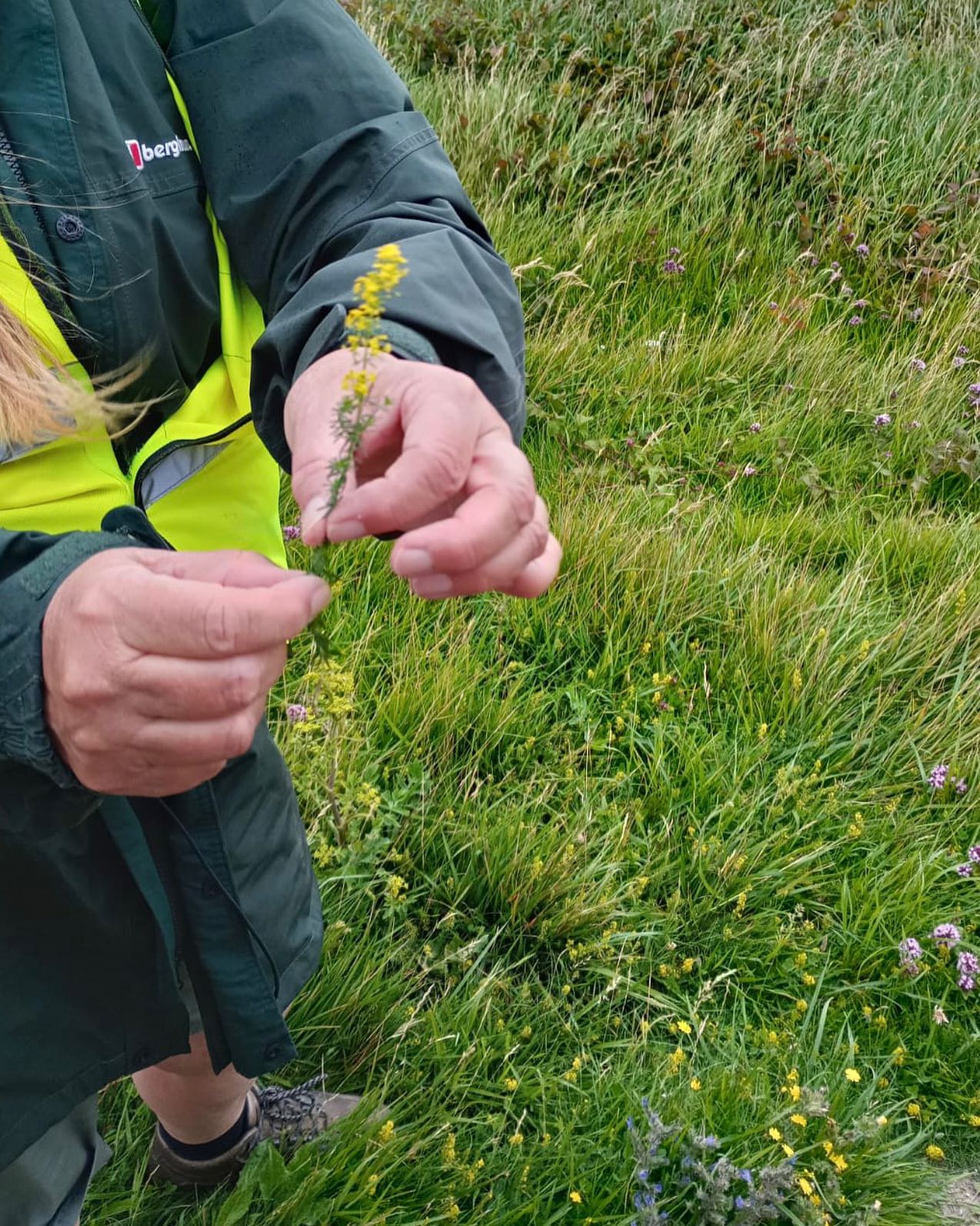
Jamie Partridge led two walks, with an early start, to look at resident butterflies on the chalk downs that top the chalk cliffs as well as south bound migratory birds in early autumn. The ‘white cliffs’ of Dover are within easy walking distance of the town and port. At the end of Athol Terrace the walkers took the path that climbs steeply up onto the cliffs passing Elaine Tribley’s Dover Totems on the way designed to give a greater awareness of chalk, the precious and unique biodiversity of the chalk downs and the birds and butterflies that live there. Jamie moved to Dover in 2021 to study bird migration extending his interest to moths and butterflies since arriving.
___________________________
From Lighthouse to Lighthouse: Chalk, Channel and Megaflood Chaos
This was a 6-hour walk led by ecologist, naturalist and environmentalist Mel Wrigley; from the festival Lighthouse on Clocktower Sq, along the Dover Esplanade, up onto Langdon cliffs to the South Foreland Lighthouse along the Dover Strait. A route that 450,000 years ago would have been a chalk bridge that joined the UK with France before the mega flood, initiated most likely by an earthquake, caused a rupture and millions of cubic metres of water per second from the glacial lake collapsed the chalk bridge and the Dover Strait was born.
Mel made clear the connectedness of our human story to geology and climatic changes and in turn the plant and animal life of which we are part. The biodiversity of the unique chalk lands Mel likened as equivalent to our rain forest. They have maintained their biodiversity per square metre by the species becoming smaller. Chalk is formed from the remains of Marine Algae and flint, that is only found in chalk, is micro crystals of silica and both are products of living animal matter.
___________________________
Radical Dover 1 & 2
by Danny Bee
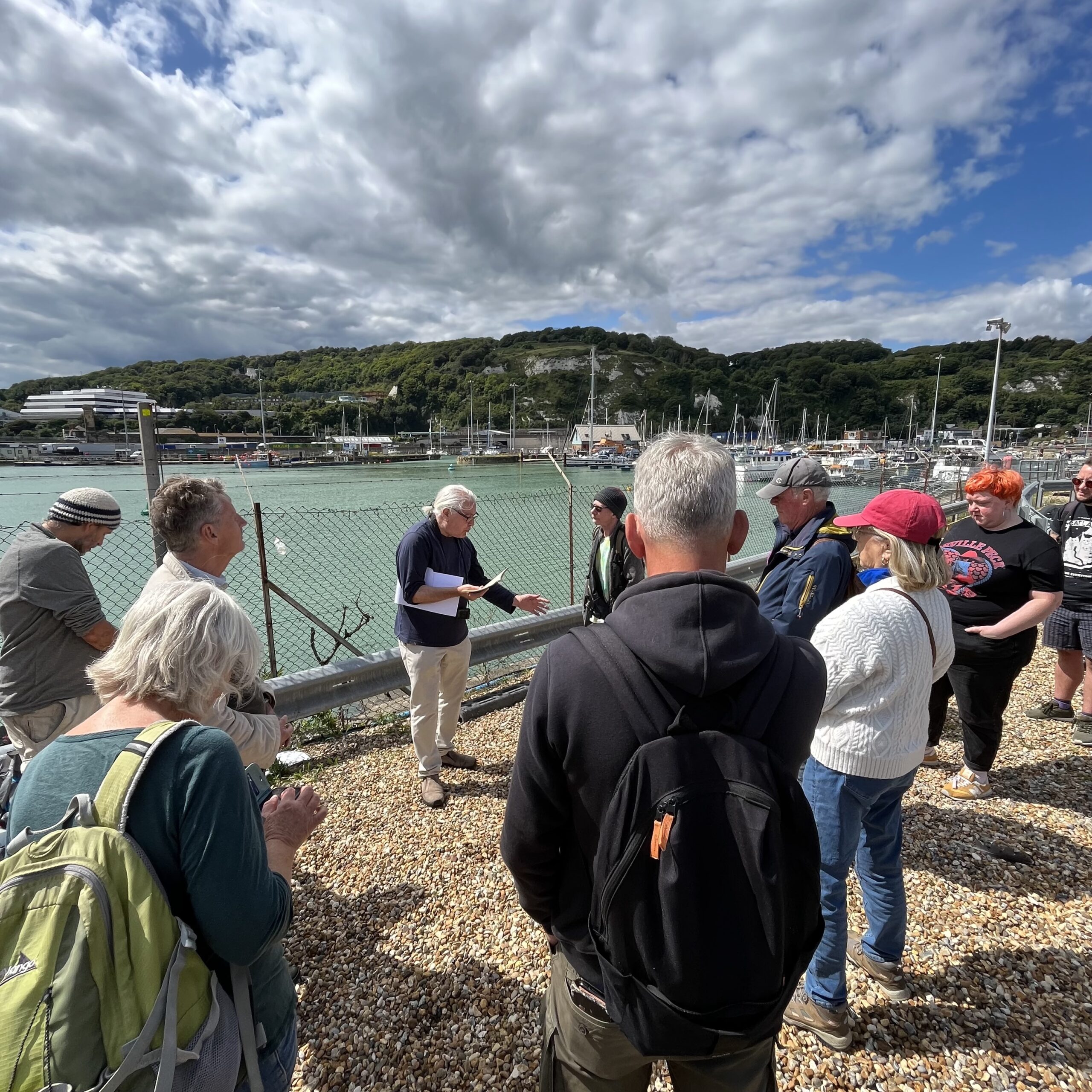
Danny Bee’s radical walks unearth the histories of class and political struggle in urban spaces. For our arts festival this summer he led two walks through Dover starting in the docks where a story unfolded both of important people and ideas arriving in the UK – including Voltaire, Marx and Engels – and the port as a place of industrial unrest in itself. Danny described a history of maritime struggle, miners strikes and the recent sacking of P+O ferry workers against a backdrop of industrialisation, automation and global capital.
From here we walked along the seafront to discuss public housing before heading into the town where the ‘Captain Swing’ agricultural riots of the 19th century and the early twentieth century struggle for women’s rights and the suffragette movement all played important parts in the town’s rich history. In the 1980’s the east Kent coalfields become a key part of the miner’s strikes with workers gathering at the port to drive to join other collieries in what became known as flying pickets.
Danny’s charisma and passion brings these difficult and important subjects to life and places them within our current political situation. As he said, the political struggles of previous generations have secured many of the things we take for granted today.
___________________________

From After the Black Gold to Monumenta Romana
by Daniel Stilwell, Ryan Cooke and Peter Morris
A walk across the North Downs Way taking in two recently completed artworks. We started at Snowdown Station with an introduction to the history of the east Kent coalfields. From there we walked to Woolage where Ryan Cooke introduced After The Black Gold, an artwork by Channel Projects that offers views back to the village and to the former colliery and a place to reflect on both. From Woolage we followed the trail to Waldershare to see Monumenta Romana by Charles Holland Architects. Daniel Stilwell relayed the story of the Waldershare estate and the Belvedere, an 18th century Palladian folly visible across the fields. Monumenta Romana reimagines the cupola once intended to complete the Belvedere. Alongside Ryan and Daniel, North Downs trail manager Pete Morris contextualised the artworks within the landscape of the downs and the programme of newly commissioned projects.
___________________________
Discover the Dour
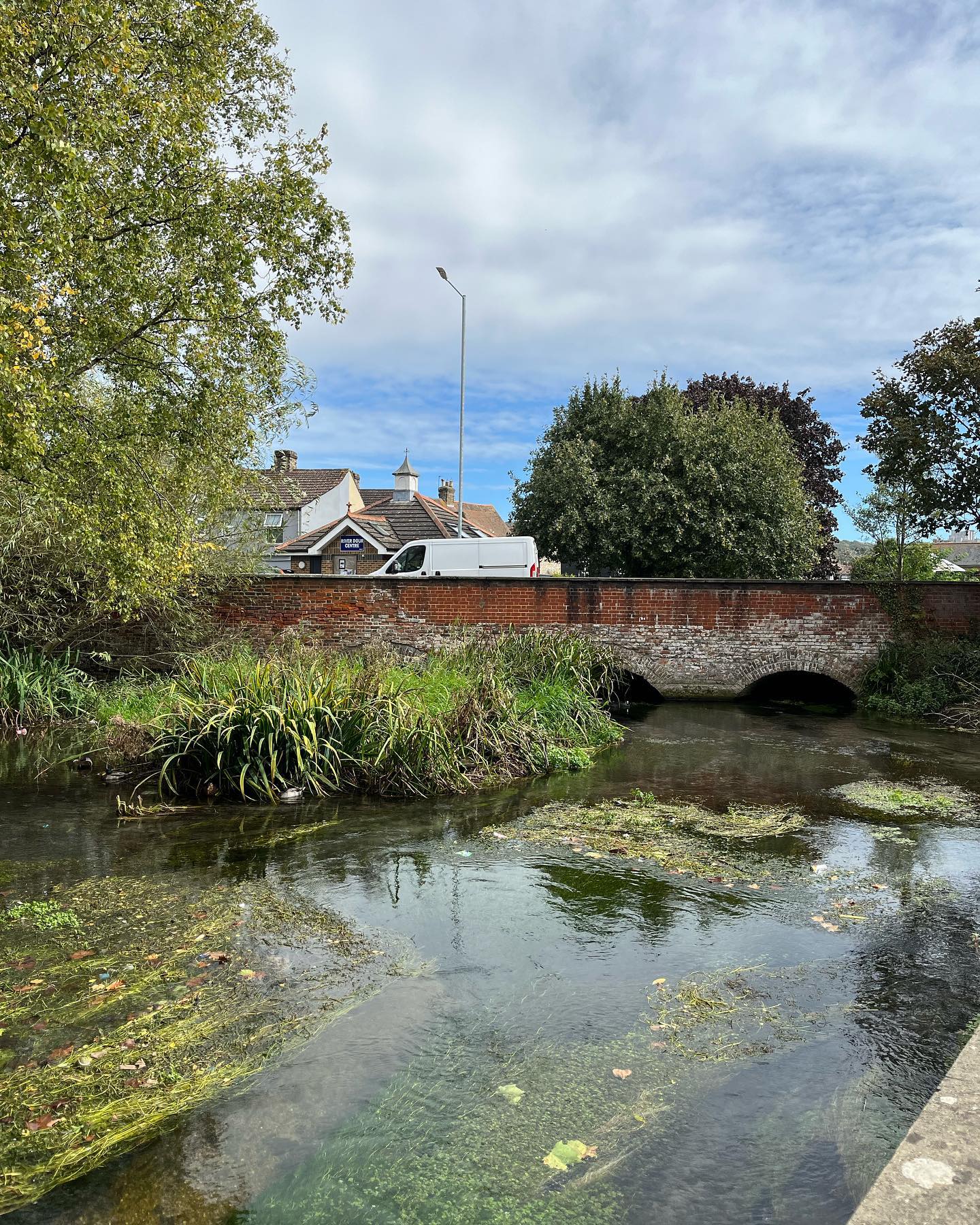
As part of the series of Sunday walks that ran throughout our Dover arts festival this summer, Iona Dubieniec of the White Cliffs Countryside Partnership led a walk along the town’s remarkable River Dour.
One of only two hundred chalk streams worldwide and home to the largest, native (non-stocked) population of brown trout in the country, the Dour is often hidden from view or hard to access. Running just 4.5 miles from its source close to Kearsney to the sea at Dover harbour, the river offers a remarkably rich eco system with eels, yellow wagtails, kingfisher, insects and plant life.
Ioana’s talk highlighted not just the life of the river but the numerous threats to it including pollution, fishing, extraction and of course climate change. The Dour’s delicate balance needs constant care and protection and understanding how we affect it starts with walks like this one. You can get more involved through @ourfinestdour and help out on regular river cleans.
The Dour offers many beautiful moments, popping up amid the traffic and the legacy of mills and industry along its length. Follow the river Dour walk to explore and enjoy this amazing natural resource.
___________________________
What We Saw
by Christopher Lumgair and Charles Holland
The last walk in our festival programme of expert-led explorations of Dover focused on the richness of the town’s architecture. Led by Christopher Lumgair – co-author of the Dover architecture guide What We Saw: The Architecture of a Port Town – and architect Charles Holland, the walk began on the seafront and weaved inland.
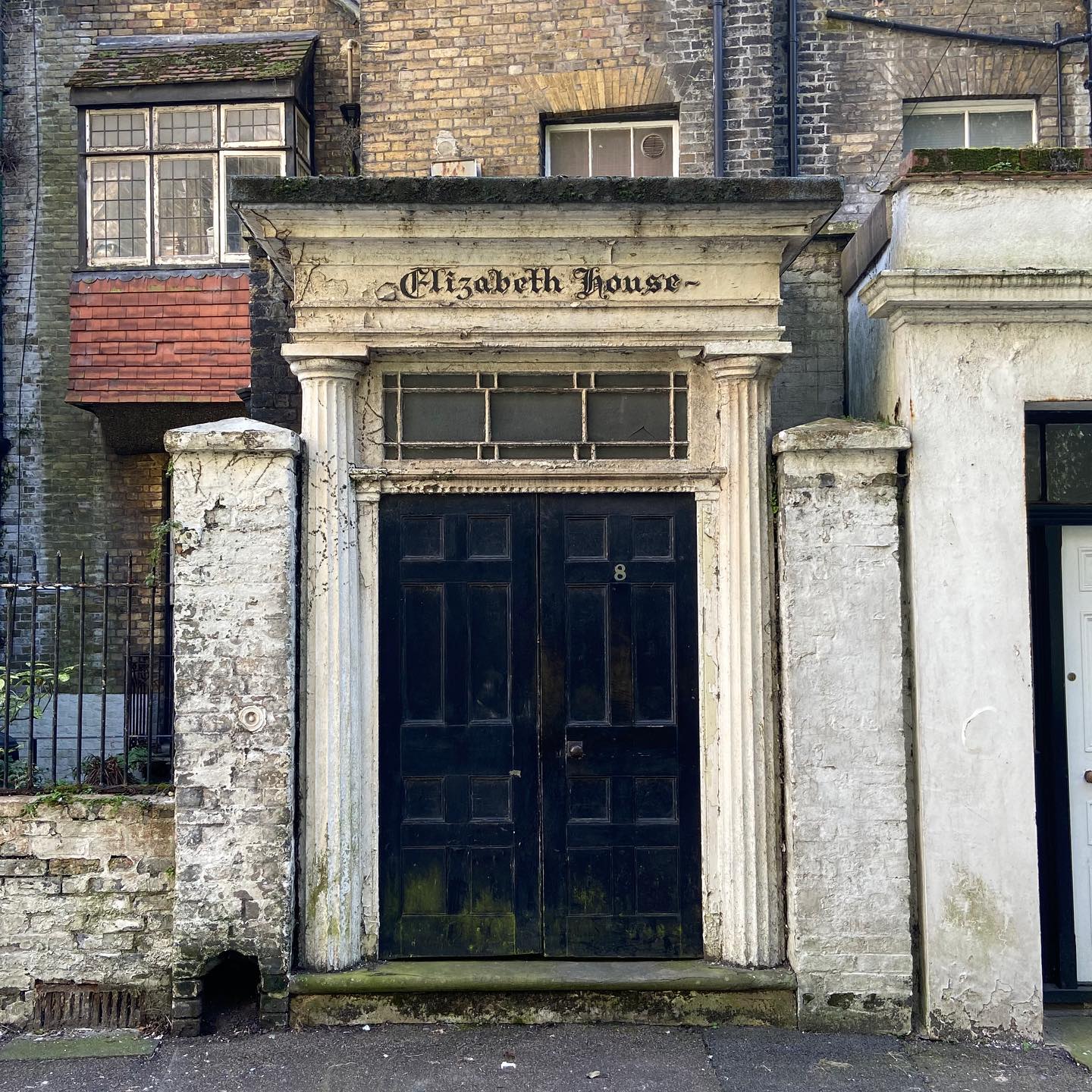
We assembled at the festival lighthouse I’m Looking Out For You – Dover’s newest (albeit temporary) architectural addition before exploring the development of the historic docks. George Devey’s Clocktower, Arthur Beresford-Pite’s Customs House and Samuel Beazley’s Lord Wardeh Hotel set the scene. From here we walked along Waterloo Crescent and Joseph Hardwick’s seaside Regency buildings, mourned the loss of Luis Erdi’s Googie-tastic Stage Hotel and stuck up for the often criticised Gateway Flats. We enjoyed the legacy of the early 19th century expansion of the town east with grand classical doorways incongruously squeezed onto East Cliff (see image) before looping back to Castle Hill and the austere, Palladian-derived architecture of the 1830s. In Market Square we took in 1950s apartments, 70s Brutalism, 80s Post Modernism as well as admiring views of Dover Castle. Finally we made our way up Biggin Street – Dover’s high street – and admired an eclectic array of late 19th and early 20th century commercial facades. We finished at Maison Dieu with its medieval hall extended with William Burgess’ remarkable Victorian Town Hall.
We could have gone on but time was ticking so we continued the conversation more informally over drinks in the White Horse pub.
-
DAD Festival 2023
You can reach the World from Dover 23 took place in Dover over the summer of 2023 running from June through to October. The festival was the first of its…
-
Artworks
The festival included a number of specially commissioned new works by Dover-based artists. Scroll down to review all the artworks. ___________________________ I’m looking out for you by Charles Holland Architects…
-
Happenings
The festival included a number of performances, screenings, interactive and time-based activities. Scroll down to review all the happenings. ___________________________ Rolling On and Off by Andrew Cross During the course…
-
Walks
Our programme of Sunday walks included Dover’s forgotten spaces, its geology and landscape, public artworks, ornithology and architecture. Scroll down to review all the walks. ___________________________ Dover Crossings 1, 2,…
-
Workshops
The festival engagement programme included a series of workshops, talks and events inviting public participation and offering the chance to develop new skills with the festival artists. Scroll down to…
-
Festival Look
This year’s festival look & feel developed by Edda Salander-Jones took its cue from the visual language established for the Digital Festival in 2021 – changing the dark blue to…